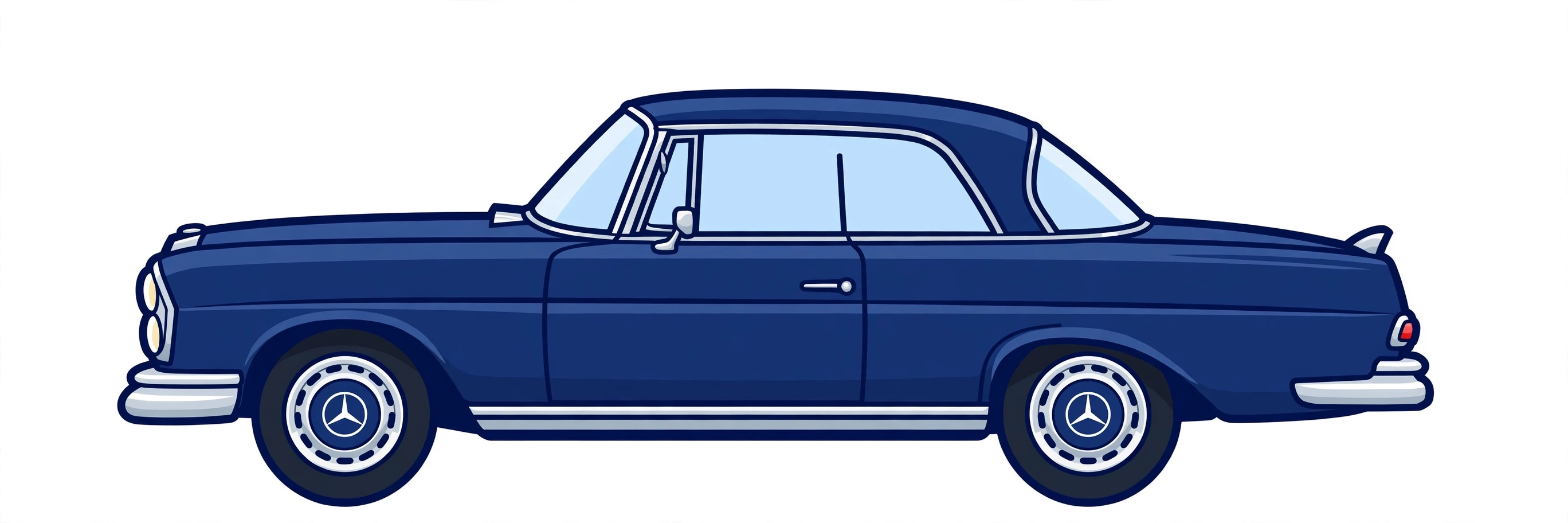
Mercedes-Benz W110 buyer's guide
The fintail 'Heckflosse' — the working Mercedes of the 1960s.
Years: 1961–1968 · Models: 190, 190D, 200, 200D, 230
Overview
The W110 was the smaller of the two fintail ranges: a modest, upright sedan sold in petrol and diesel forms, with the six-cylinder 230 joining for the last years. These were taxis, family cars, and exports — used fully and mostly used up. Surviving cars in good order are now genuinely scarce, and the diesels have a devoted following for their durability.
Engines
The 1.9-litre M121 petrol four; the OM621 and OM615 diesels (1.9 and 2.0 litres); and the 2.3-litre M180 six in the 230.
What to check
- Rust in the tail fins and rear wings — the fin roots trap moisture — plus floor pans, sills, and the front valance.
- On diesels, cold starting, compression, and the glow-plug system; a diesel that starts cleanly from cold is telling you most of what you need to know.
- King-pin and steering wear, and the condition of the early drum brakes on the first cars.
- Interior completeness — the trim is simple but specific pieces are getting hard to find.
- On the 230, the same six-cylinder checks as the W111: carburettors, valve clearances, and oil leaks.
Values
The 230 six and the diesel models lead a modest market; in the United States, diesel fintails are rarer than they were in Europe and draw interest accordingly. Condition and originality matter more than specification at these prices.
Buying tips
Judge a W110 mostly on its body: mechanical parts are durable and largely available, but rust repair in the fins and floors is where the money goes. A slow diesel is normal; a smoky, hard-starting one is not.
See the 8 W110 cars currently listed.