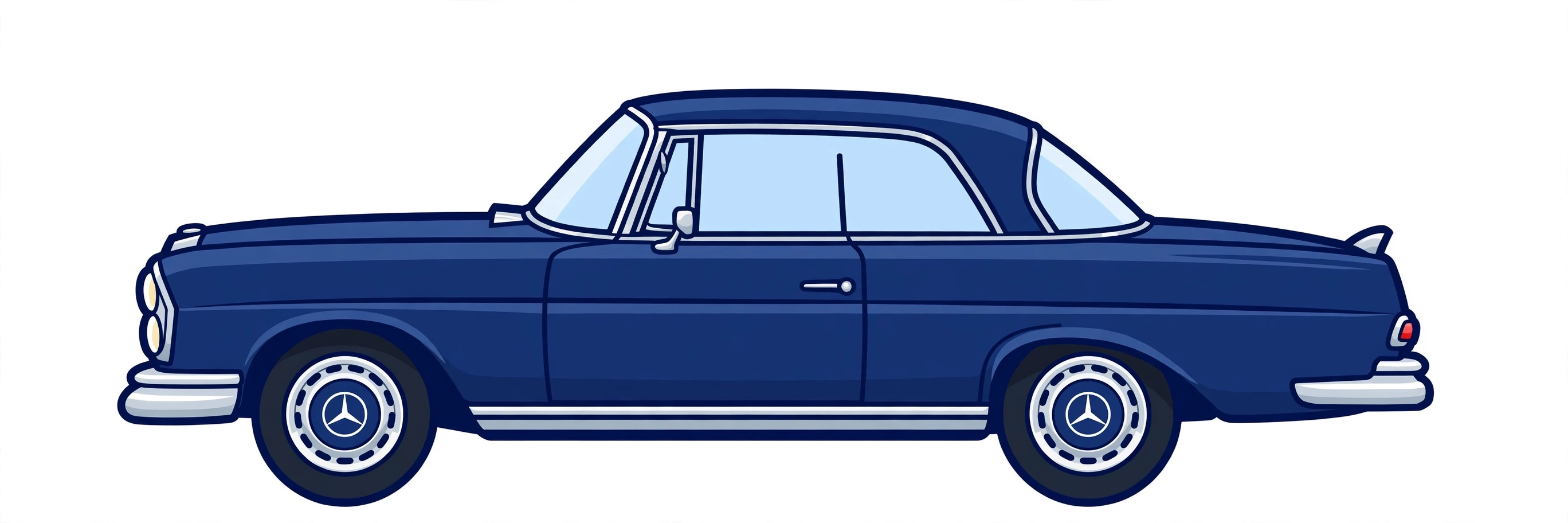
Mercedes-Benz W201 buyer's guide
The 190 — the 'baby Benz' that took Mercedes downmarket and to the DTM.
Years: 1982–1993 · Models: 190E, 190E 2.0, 190E 2.3, 190D, 190E 2.3-16, 190E 2.5-16
Overview
The W201 was Mercedes' first compact car of the modern era, engineered with the same seriousness as the S-Class — including a multi-link rear axle that set new standards. Most were ordinary 190E and 190D sedans and were used accordingly; the Cosworth-engineered 16-valve cars, built for rallying and then touring-car racing, are the collectible branch of the family.
Engines
The M102 fours and the 2.6-litre M103 six; the OM601 and OM602 diesels; and the 2.3 and 2.5-litre 16-valve fours developed with Cosworth in the 190E 2.3-16 and 2.5-16.
What to check
- Rust, which is lighter than on older Mercedes but real at the wheel arches, jacking points, and front wings.
- On the 16-valve cars, the rear self-leveling suspension, the dogleg manual gearbox's synchromesh, and the engine's service history — these were bought to be driven hard.
- Head-gasket oil leaks on high-mileage M102 fours, and general cooling-system age.
- Interior wear, which on ordinary cars quickly separates the cared-for from the merely surviving.
- On any claimed 16-valve, verify identity carefully — the premium invites imitation.
Values
The 2.3-16 and 2.5-16 (and the rare Evolution models, effectively absent from the open market) carry the series. Ordinary 190s are bought on condition alone, and the best of them — low mileage, records, original paint — are beginning to be collected as period pieces.
Buying tips
For a 16-valve, buy history: a documented car that has been maintained as a sports sedan, not merely stored. For an ordinary 190, apply the usual rule — the best-condition car is the cheapest one to own.
See the 6 W201 cars currently listed.